
AI and Equity in Public Service: Practical Tools for Navigating Disruption Without Losing Your Mission
Artificial intelligence is no longer a future concern for public servants. It is a present operational reality. Yet the adoption of AI tools in government and nonprofit contexts raises urgent equity questions that most training programs have not yet addressed: Whose values are encoded in these systems? Who bears the costs when they fail? And how do public servants maintain their equity and diversity commitments when algorithmic tools introduce new forms of discretion, drift, and displacement?
This workshop draws on the presenter's forthcoming book, How Mission-Driven Organizations Work with AI: A Cointelligence Framework (Edward Elgar Publishing), to introduce participants to three critical dynamics shaping AI's impact on equity in public service. Algorithmic Discretion describes how AI systems make consequential decisions that were once made by humans. Algorithmic Mission Drift describes how mission-driven organizations gradually shift their values when optimizing for what AI can measure. Deliberative Atrophy describes how overreliance on AI erodes the professional judgment and civic deliberation that equity work requires.
Rather than framing AI as either a threat to be feared or a solution to be embraced uncritically, this workshop provides a structured, practitioner-facing framework called the Public Values Audit Matrix (PVAM) for assessing whether AI tools in a participant's own organization are aligned with public values, equity commitments, and accountability structures. The PVAM is specifically designed to help public servants align AI adoption with organizational DEI goals, meet emerging AI equity standards, and build the kind of AI literacy needed to ask the right questions before, during, and after implementation. Participants will apply the PVAM to real-world scenarios drawn from municipal, nonprofit, and public health contexts.
By the end of this session, attendees will leave with a practical audit tool they can immediately apply to their workplace, a working vocabulary for engaging leadership and colleagues on AI equity concerns, and the confidence to navigate AI adoption without compromising their diversity, equity, and inclusion commitments.
Handout(s):
-
Practicing (applying concepts, knowledge though hands-on engagement)
-
Building Public Trust
Digital Transformation and Innovation
-
Auditory
Visual
Reading/Writing
Social/Interpersonal
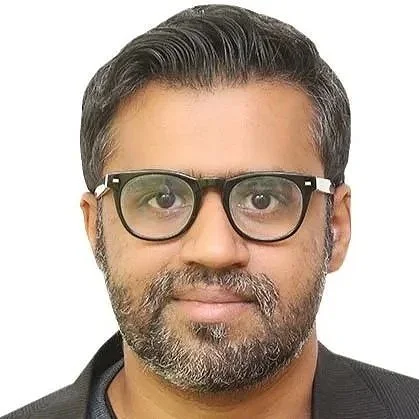
Rafeel Wasif, Ph.D.
Assistant Professor of Public Administration at Portland State University's Mark O. Hatfield School of Government
He/Him
Rafeel Wasif, Ph.D. is an Assistant Professor of Public Administration at Portland State University's Mark O. Hatfield School of Government. He is co-authoring How Mission-Driven Organizations Work with AI: A Cointelligence Framework (Edward Elgar Publishing), a practitioner-oriented scholarly framework for helping mission-driven organizations navigate AI adoption without compromising their public values. He has authored two books, seventeen peerreviewed articles, and ten public reports on equity, philanthropy, public administration, and organizational ethics. A significant strand of his scholarship examines Muslim-led and faithbased organizations as sites of culturally distinctive philanthropic and civic practice, contributing original empirical and theoretical work on diversity, inclusion, and community-centered service delivery in underrepresented organizational contexts. His work also advances data justice as a framework for equitable governance, including applied partnership with the Oregon Department of Education as a Data Justice Steward, where he has guided the development of data collection policies that center historically marginalized communities. He holds a Fulbright Fellowship, is recognized as an ARNOVA Emerging Scholar, and has secured over $2.5 million in competitive research funding. Dr. Wasif teaches graduate courses in Public Ethics, Public Administration, Public Policy, and AI Governance at PSU, and develops original case studies that bring diverse organizational contexts into the classroom, drawing on his research with Muslim-led nonprofits, immigrant-serving organizations, and cross-national philanthropic networks. He delivers professional training to public sector and nonprofit audiences regionally and nationally. His research and teaching sit at the intersection of technology, organizational ethics, and equitable public service, work he brings into practice through applied scholarship, professional development, and executive education.
Learn more at www.rafeelwasif.com